Best Lab Grown Diamond Engagement Rings to Consider
The best lab grown diamond engagement rings do more than deliver exceptional sparkle. They make a decisive visual statement, reflect the wearer’s style, and bring the confidence of a diamond chosen with both romance and purpose in mind. The right ring is not defined by the largest center stone alone. It is the balance of cut, proportions, setting, metal, and the way it feels on the hand every day.
For couples who want visible luxury without the traditional mined-diamond markup or sourcing concerns, lab-grown diamonds create more room to choose brilliance on your terms. That could mean a more substantial carat weight, a distinctive hidden halo, or a refined solitaire made in the gold color you will want to wear for decades.
What Makes the Best Lab Grown Diamond Engagement Rings Stand Out
Lab-grown diamonds have the same core optical, physical, and chemical characteristics as mined diamonds. They are real diamonds, created in a controlled environment rather than extracted from the earth. Their fire, hardness, and lasting beauty come down to the quality of the individual stone and the craftsmanship of the ring around it.
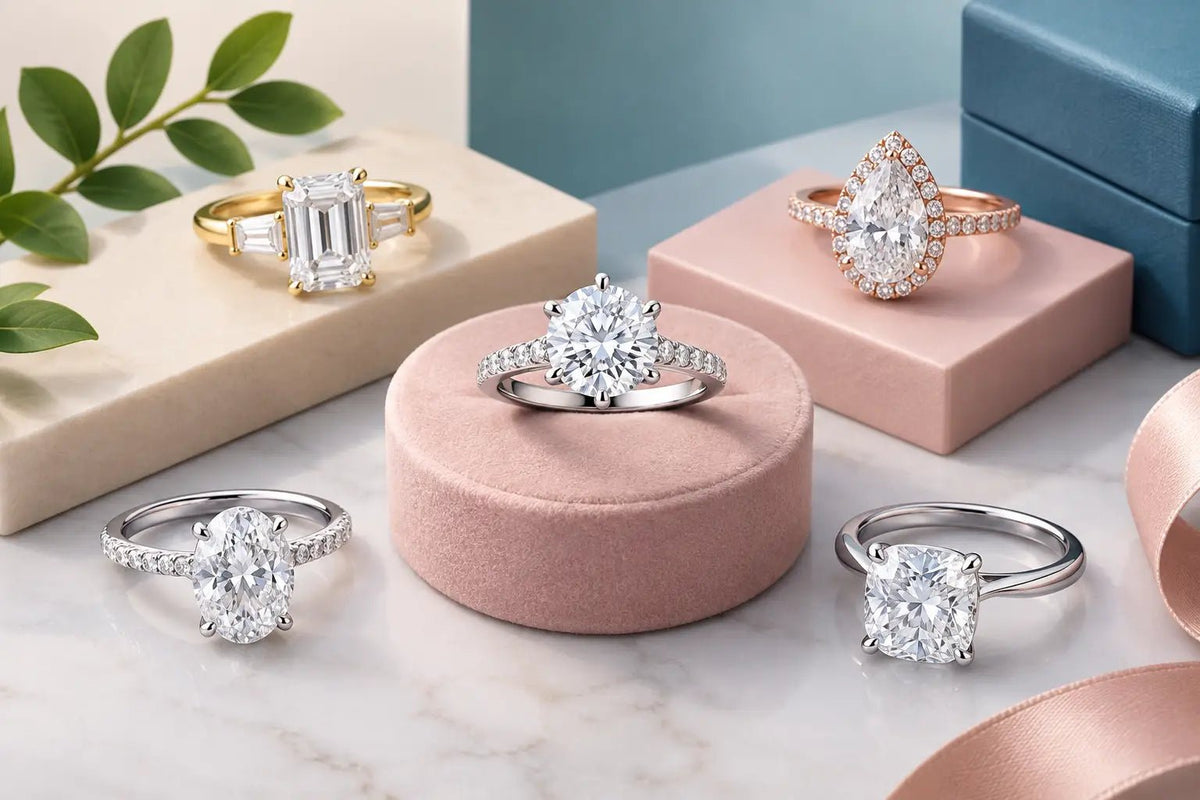
The most compelling engagement rings begin with a diamond that is cut for life, not simply measured for size. A beautifully cut round diamond throws crisp white light and rainbow fire. An elongated oval can make the finger appear longer while offering a generous face-up look. Pear, emerald, radiant, and cushion cuts each bring their own personality, from soft romance to clean architectural glamour.
The setting matters just as much. It controls how much light reaches the diamond, how the ring reads from across the room, and how naturally it fits into a real wardrobe. A finely made setting should feel secure and substantial without overpowering the center stone.
Start With the Silhouette You Want to See Every Day
An engagement ring is personal jewelry at its most visible. Before comparing specifications, decide what feeling you want from the overall silhouette.
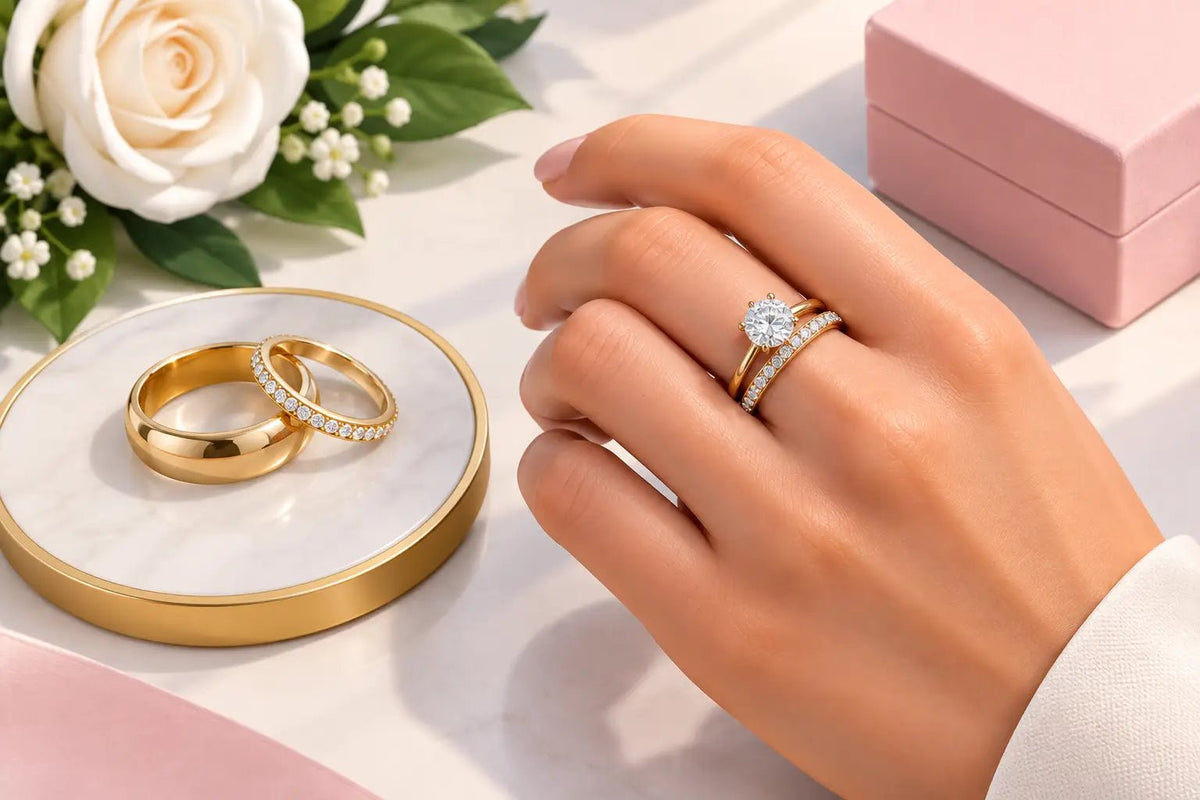
A classic solitaire is enduring for a reason. With minimal metal around the center diamond, it keeps the focus exactly where it belongs. Choose a four-prong setting for a lighter, more open look, or six prongs for a traditional profile with added visual presence. A solitaire also leaves room for a future wedding band, whether you prefer a slim polished band or a diamond-forward stack.
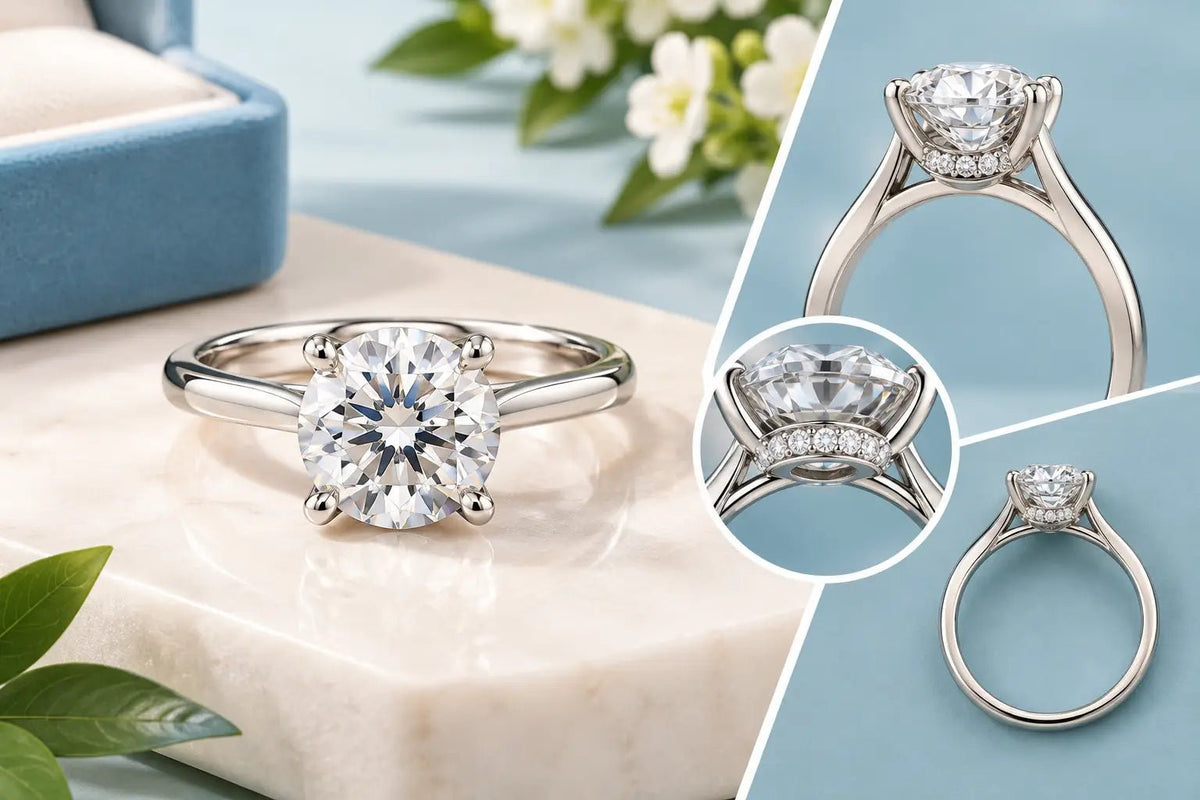
For added dimension, a hidden-halo solitaire offers a more elevated reveal. The delicate circle of pavé diamonds sits beneath the center stone, creating brilliance from the side while preserving the clean, confident look of a solitaire from above. It is an ideal choice for someone who appreciates detail but does not want the ring to feel overly ornate.
A halo setting has a different effect. Surrounding the center diamond with smaller diamonds can make the stone appear larger and create an unmistakably glamorous finish. This is especially striking with oval, pear, and cushion-cut center stones. The trade-off is that a halo has a more elaborate look and may call for a wedding band shaped to sit neatly beside it.
Three-stone rings bring symbolism and scale, with side diamonds representing a couple’s past, present, and future. They are naturally more substantial across the finger and suit buyers who want their ring to feel like fine jewelry from every angle. For a modern interpretation, pair an oval center diamond with tapered baguettes, or choose pear side stones for dramatic sparkle.
Choose a Diamond Shape That Matches Your Style
There is no universal best shape. The best choice depends on whether you are drawn to classic brilliance, vintage softness, or a fashion-forward profile.
Round brilliant diamonds offer the most familiar, high-fire sparkle. They suit nearly every setting style and make an excellent choice for someone who wants timelessness with maximum light return. Oval diamonds feel equally romantic but more directional, often appearing larger than a round diamond of the same carat weight because of their elongated surface.
Emerald cuts are for the wearer who values quiet confidence. Their long, mirror-like facets produce flashes of light rather than the glittering sparkle of a round stone. Clarity is more visible in this shape, so it is worth prioritizing a clean-looking diamond and a setting with precise lines.
Radiant cuts combine an elongated profile with vivid brilliance, making them a strong choice for someone who wants the presence of an emerald shape with more sparkle. Pear-shaped diamonds create an elegant teardrop silhouette and can be worn point-up or point-down depending on personal style. Cushion cuts, with their softened corners and romantic glow, feel luxurious and slightly more expressive.
When choosing an elongated diamond, ask to see its length-to-width ratio. This measurement influences whether an oval, pear, radiant, or emerald cut looks softly proportioned, distinctly elongated, or fashionably narrow. Personal preference should lead here. A ratio that looks extraordinary on one hand may not be the one that feels right on yours.
Prioritize Cut and Visual Quality Over a Paper-Perfect Grade
Diamond grading gives you a valuable framework, but it should not replace looking at the diamond as a whole. Cut has the greatest impact on sparkle. In round diamonds, an excellent cut is a strong place to begin. In fancy shapes such as ovals and pears, review the stone for symmetry, lively light performance, and a pleasing outline.
Color is also contextual. Near-colorless diamonds can appear beautifully bright once set in yellow or rose gold, where the warmth of the metal is part of the design. White gold creates a cooler, high-contrast backdrop that can make a colorless or near-colorless diamond appear especially crisp.
Clarity should be judged by what you can actually see. Many diamonds with inclusions visible under magnification look perfectly clean to the naked eye. Choosing an eye-clean diamond rather than pursuing the highest clarity grade can allow more of the budget to go toward carat weight, cut quality, or a more detailed setting. With emerald cuts and other step-cut shapes, however, inclusions may be easier to notice, so clarity deserves closer attention.
Select Gold for Contrast, Warmth, and Everyday Wear
The metal color changes the entire mood of an engagement ring. White gold is polished, bright, and traditionally bridal. It enhances the icy brilliance of a white diamond and complements platinum-toned wedding jewelry. Yellow gold offers rich contrast, bringing warmth and a more iconic fine-jewelry presence to a solitaire or three-stone ring. Rose gold is soft, romantic, and distinctive, especially with oval, pear, and cushion-cut diamonds.
Gold purity is an equally practical choice. A 10K ring has greater alloy content and can be an appealing option for active daily wear. A 14K ring offers a balanced combination of richness and durability, which is why it remains a favorite for engagement rings. An 18K ring has a deeper gold tone and a more luxurious feel, though its higher gold content makes it slightly softer. The best option depends on your preferred color, lifestyle, and how substantial you want the metal to feel.
Make Carat Weight Work With the Setting
Lab-grown diamonds make statement-worthy carat weights more attainable, but proportion remains essential. A larger diamond needs a setting designed to support it well. Low, secure prongs can help a substantial center stone feel more wearable, while a carefully proportioned band keeps the ring balanced rather than top-heavy.
Consider the visual size of the diamond, not only the carat number. An oval or pear often presents larger from the top than a round diamond of equal weight. A halo can amplify the perceived size of the center stone, while a slim band can create a more dramatic contrast. If a large center diamond is the priority, select a setting with enough structure to protect it without adding unnecessary visual weight.
Ring size also affects the final impression. The same diamond will cover more of a smaller finger and look more delicate on a larger ring size. A precise measurement is worth taking before ordering, particularly for rings with diamond-set bands that are more difficult to resize.
The Final Details That Turn a Ring Into Yours
The strongest engagement ring choice is one that holds its impact after the proposal photographs are over. Think about how it will sit beside a wedding band, whether the profile works with your day-to-day routine, and whether the metal suits the jewelry you already wear most often.
At Eternal Jewels, a hidden-halo solitaire can be configured across gold colors, purities, carat weights, and ring sizes, allowing the final piece to feel intentionally chosen rather than simply selected from a case. That flexibility matters when the goal is a ring with both unmistakable presence and a personal point of view.
Choose the diamond that makes you pause when you see it on the hand. The best engagement ring is not the one that checks the most boxes on paper. It is the one whose brilliance feels entirely like the beginning of your story.