How to Wear Wedding Rings Together Beautifully
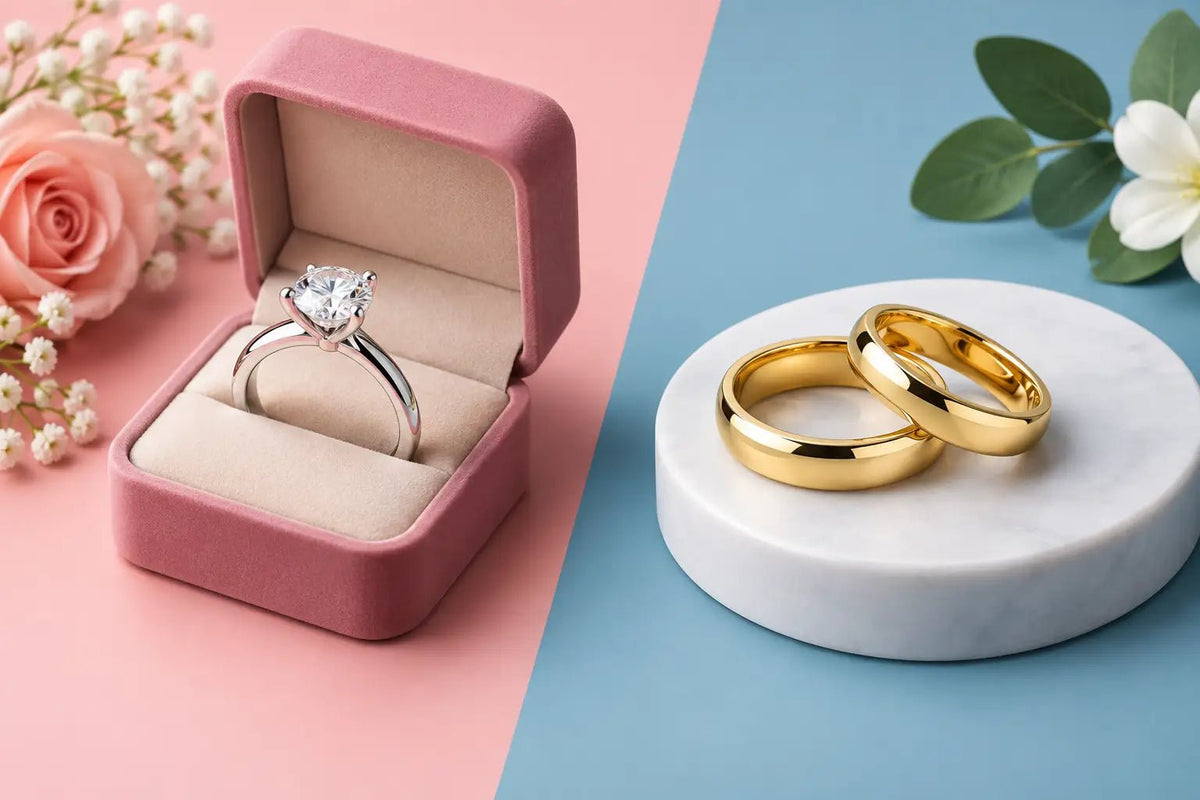
Your wedding set should look intentional from every angle, not like two beautiful rings competing for space. Knowing how to wear wedding rings together comes down to proportion, fit, metal harmony, and the way your engagement ring sits against its band. There is tradition to consider, but your final choice should feel as personal and polished as the rings themselves.
For many couples, the wedding band becomes the piece that makes an engagement ring feel complete. A slim diamond band can sharpen the presence of a solitaire. A curved band can frame a hidden-halo center stone without leaving an awkward gap. A bold eternity band can turn a classic bridal ring into a high-jewelry statement. The right pairing honors the symbolism while giving your diamonds the visual impact they deserve.
Which Finger Should Wedding Rings Go On?
In the United States, wedding rings are traditionally worn on the ring finger of the left hand. The engagement ring and wedding band are worn together on that finger after the ceremony. This custom is often linked to the old belief that a vein ran directly from that finger to the heart, but the modern meaning is simpler: it is the hand and placement most people recognize as a wedding set.
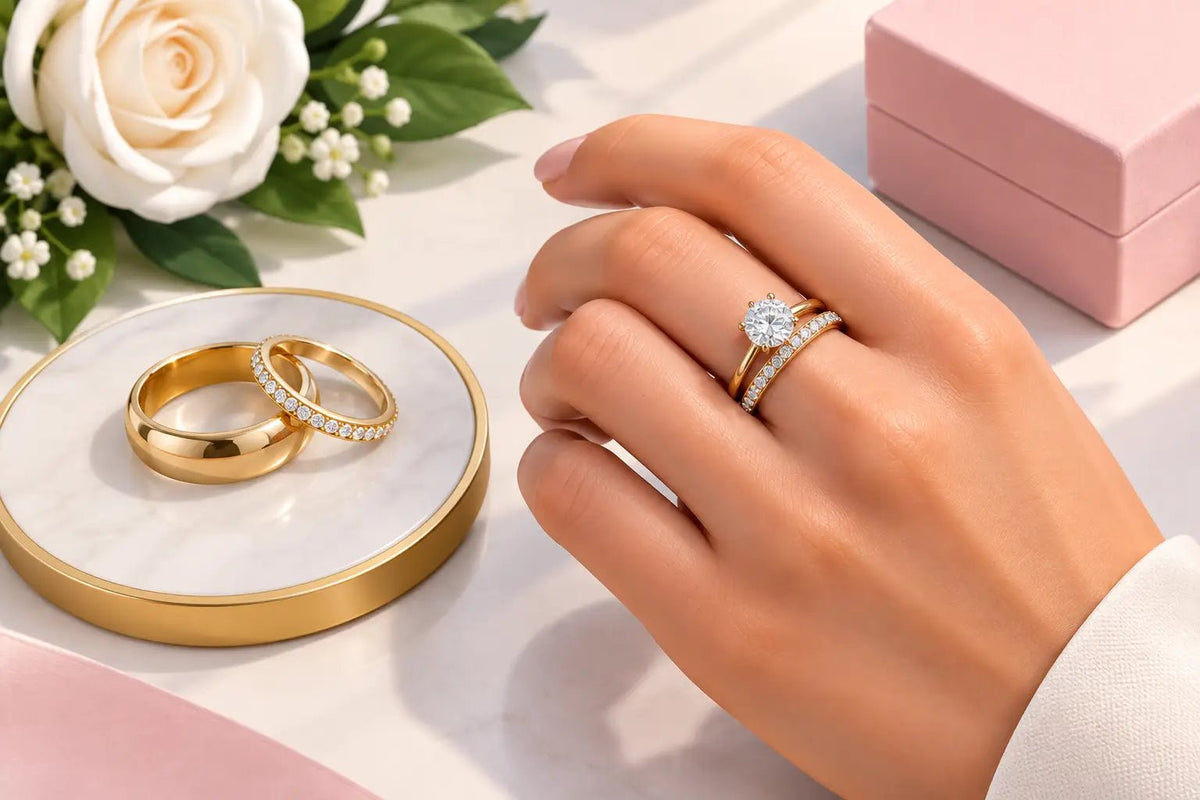
The traditional order places the wedding band closest to your heart, with the engagement ring stacked above it. During the ceremony, some people temporarily move the engagement ring to their right hand so the band can be placed directly on the left ring finger. The engagement ring then returns on top of the band afterward.
That said, tradition is a starting point, not a rule. If your engagement ring fits more comfortably beneath the band, if the band has more emotional significance, or if you simply prefer the look, reverse the order. Some wear their rings on the right hand for cultural, practical, or style reasons. Your set should feel luxurious to wear, not constrained by a convention that does not suit your life.
How to Wear Wedding Rings Together With a Clean Stack
The most elegant ring stacks look considered rather than crowded. Start with the engagement ring as the focal point, then choose a wedding band that supports its silhouette. The goal is not necessarily a perfect match. It is a balanced relationship between the center stone, the setting height, band width, and diamond detail.
Let the engagement ring set the proportions
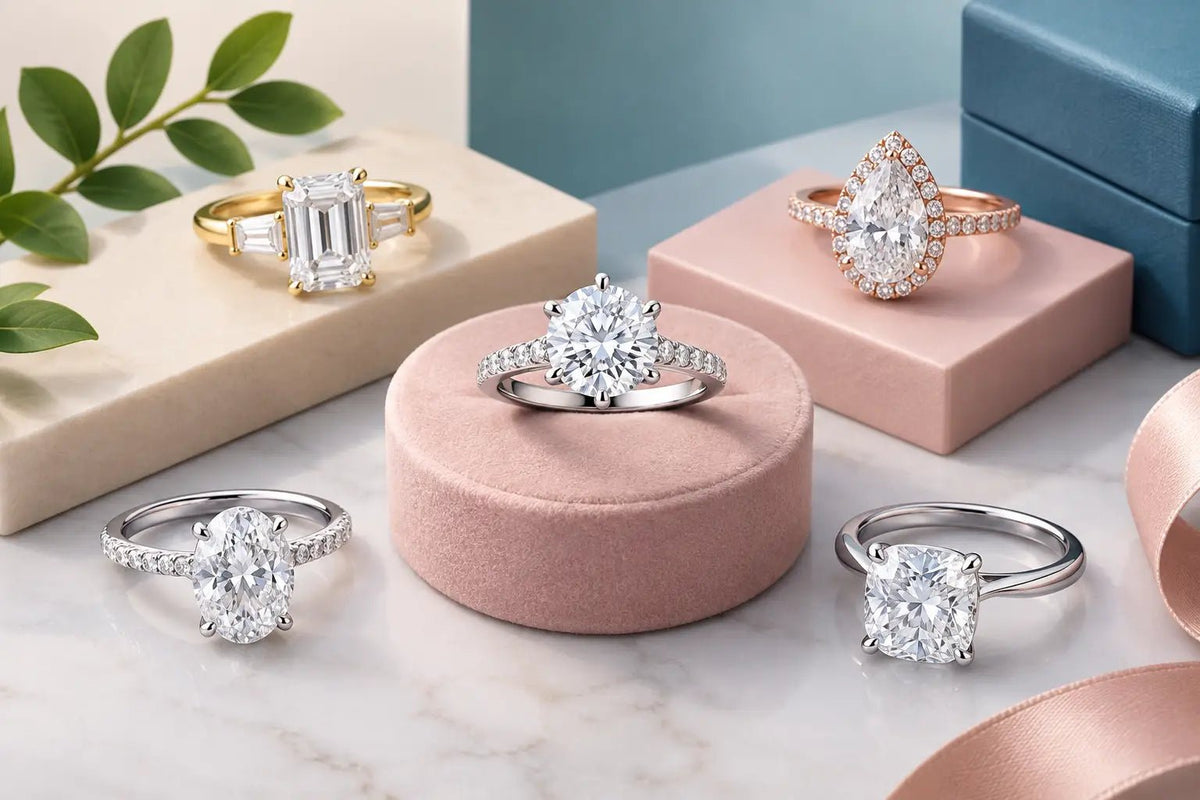
A solitaire engagement ring with a prominent round, oval, pear, or emerald-cut diamond can carry a delicate pavé band beautifully. The contrast keeps attention on the center stone while adding a continuous line of brilliance at the base.
If your engagement ring already has a hidden halo, pavé shank, or substantial diamond coverage, a plain polished gold band may create the most refined contrast. It gives the center diamond room to shine and avoids an overly dense, glitter-on-glitter effect. Conversely, a minimal solitaire is an ideal canvas for a more expressive eternity band or a stack of two slender diamond bands.
Band width matters as much as carat weight. A very slim engagement band beside a noticeably wide wedding band can look modern and fashion-led, but it can also visually overpower a petite center setting. For a classic matched effect, keep widths close. For a bolder, editorial stack, vary them deliberately - perhaps a refined solitaire paired with a wider bezel-set diamond band.
Choose a band shape that respects the setting
Not every straight wedding band will sit flush against every engagement ring. Elevated settings, cathedral shoulders, and low-set center stones may leave a small space between the rings. This is not a flaw. A visible gap can feel airy and intentional, particularly with a solitaire that deserves visual separation.
If you prefer a close-fitting look, consider a contoured or notched band shaped around the center setting. Curved bands are especially effective with pear, marquise, oval, and round solitaires, where the sweep of the metal can echo the center stone’s outline. A chevron or V-shaped band creates a more directional look and can add drama beneath an oval or pear diamond.
Before committing, view the rings from the top and side. A pair can look perfectly aligned from above yet rub together at the gallery, causing wear over time. Fine jewelry should be designed for beauty, but daily comfort and long-term care are part of the luxury.
Match Metals - or Mix Them With Intention
Matching the metal color of your wedding band to your engagement ring is the easiest route to a cohesive bridal set. Yellow gold with yellow gold reads warm and timeless. White gold creates a crisp, diamond-forward effect. Rose gold offers softness and romance, especially around a bright white lab-grown diamond.
Mixed-metal stacks can be equally sophisticated when the contrast looks deliberate. A yellow gold wedding band under a white gold engagement ring can make the center diamond appear especially bright, while a rose gold accent brings warmth to a clean, modern stack. The key is repetition. If you mix metals, echo the secondary color elsewhere through an additional fine band, a watch, or other jewelry, so the combination reads styled rather than accidental.
Gold purity also affects the look and feel. 10K gold is durable for active daily wear, while 14K gold offers an enduring balance of richness and resilience. 18K gold has a deeper color and a more luxurious softness, making it especially beautiful for statement-forward bridal styling. When two rings will be worn touching every day, ask a jeweler about metal compatibility and setting design, particularly if one ring has delicate pavé details.
Create Brilliance Without Overcrowding
Diamonds bring light to a wedding stack, but more diamonds do not automatically mean a better result. Consider where you want the eye to land. If your engagement ring is a high-carat hidden-halo solitaire, a fine diamond wedding band adds radiance while preserving the center stone as the hero. If the engagement ring is understated, a graduated or full-eternity diamond band can provide the glamour.
Full-eternity bands offer uninterrupted sparkle and a striking profile, but their diamonds extend around the entire shank, which can make future resizing difficult. Half-eternity bands are often more practical, offering a diamond-forward face with a plain section at the back for comfort and potential adjustments. This is one of those decisions where lifestyle matters as much as visual impact.
For a distinctive look, pair a classic engagement ring with a bezel-set diamond band. Bezels give each stone a sleek frame and can make the stack feel more contemporary than traditional pavé. Alternating diamond shapes, such as round and marquise accents, introduce texture without requiring additional rings.
Get the Fit Right Before You Commit
Two rings worn together take up more room on the finger than either ring does alone. A wedding band that fits perfectly by itself may feel tight when stacked with an engagement ring, especially in warm weather or during travel. Try on the intended pair for several minutes, making a fist and moving your hand naturally before deciding on sizing.
The rings should not spin constantly, pinch at the base of the finger, or feel difficult to remove. A slight amount of movement is normal, but an overly loose stack increases the risk of the rings turning, separating, or catching on clothing. If you are ordering online, measure carefully and account for the combined width of both bands. Wider stacks commonly need a slightly different fit than a single delicate ring.
Also consider your daily routine. If you work with your hands, exercise frequently, or prefer a lower profile, a streamlined band and low-set engagement ring may serve you better than a tall, multi-band stack. You can always reserve an extra diamond band for dinners, celebrations, and occasions when you want maximum brilliance.
When a Gap Is Beautiful and When It Is Not
A gap between an engagement ring and wedding band is one of the most discussed bridal styling details. There is no universal right answer. If the gap is caused by your setting and the rings sit comfortably without rubbing, it can look graceful and architectural. It is particularly appealing when the engagement ring has a substantial gallery or sculptural side profile.
A gap may feel less intentional when it is very narrow, uneven, or caused by rings that continually twist away from each other. In that case, a curved band, a custom contour, or a slightly different band width can resolve the issue. The most beautiful solution is the one that looks polished from a natural viewing distance and wears comfortably through an ordinary day.
Make the Set Your Signature
A wedding stack can evolve with you. Start with the engagement ring and wedding band, then mark an anniversary or personal milestone with a slim diamond enhancer. A third ring can sit above the engagement ring, beneath the wedding band, or on the opposite hand as a complementary statement. There is no need to build the full stack at once.
For couples choosing lab-grown diamonds, this flexibility can be especially compelling. You can prioritize a spectacular center stone now, then add meaningful diamond layers over time without compromising on brilliance, craftsmanship, or values. Eternal Jewels designs bridal pieces around that same idea: visible luxury, made more purposeful through lab-grown diamonds.
Wear the rings in the order that feels right, choose details that flatter your center stone, and leave room for the life you will build in them. The finest wedding stack is not the one that follows every rule. It is the one you reach for every morning because it still feels unmistakably yours.