Difference Between Wedding and Engagement Rings
A proposal ring is often the first diamond piece someone notices from across the room. A wedding band is the piece that stays close through every ordinary and extraordinary day that follows. Understanding the difference between a wedding and engagement ring helps you choose both with intention - whether your vision is a dramatic hidden-halo solitaire, a refined diamond band, or a stack that makes its own statement.
What Is the Difference Between Wedding and Engagement Rings?
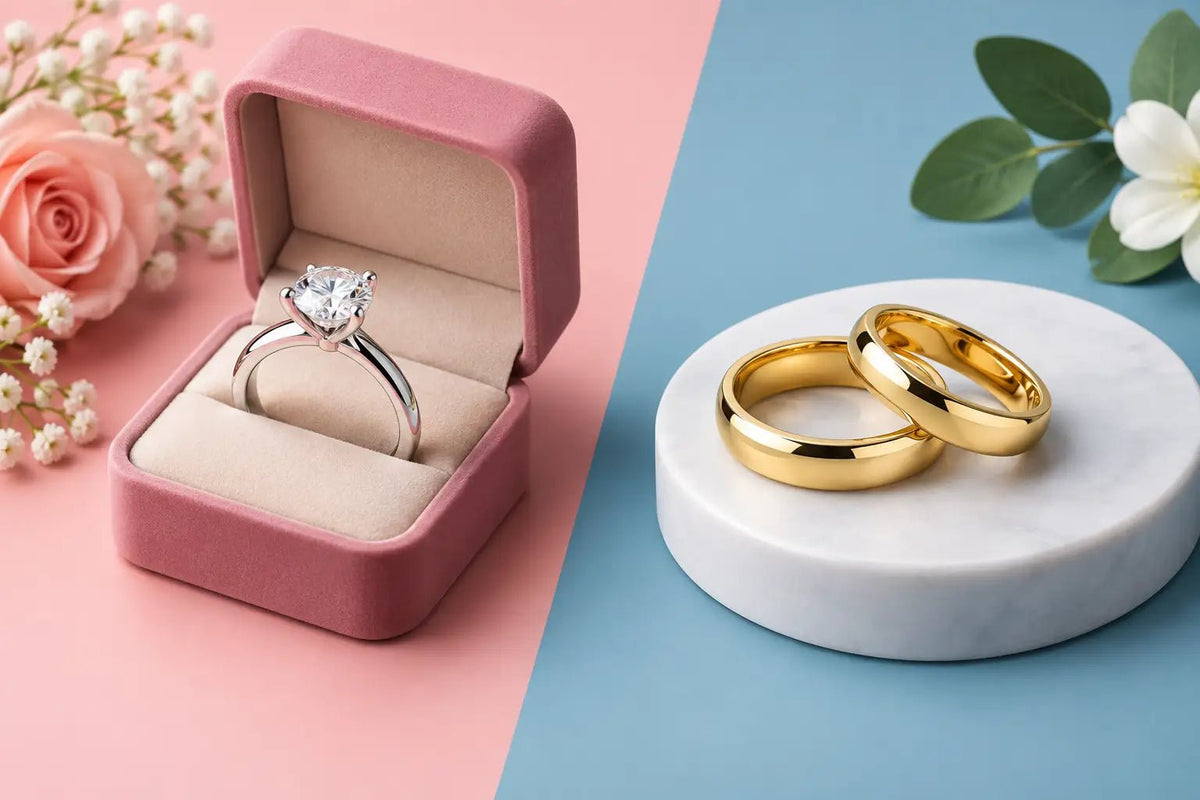
The clearest difference is in timing and purpose. An engagement ring is given at the proposal or during the engagement period. It symbolizes the promise to marry and is traditionally worn before the ceremony. A wedding ring, also called a wedding band, is exchanged during the wedding ceremony and represents the marriage itself.
Their designs are usually different, too. Engagement rings tend to place a center diamond at the heart of the design. The stone may be set in a classic solitaire, framed by a hidden halo, or accented with pavé diamonds along the band. It is often the more expressive, individually chosen ring.
Wedding bands are generally lower-profile and designed for comfort, longevity, and easy pairing. They can be plain gold, diamond-set, sculpted, contoured, or substantial enough to stand beautifully on their own. The traditional distinction is simple, but modern bridal jewelry has far more room for personal style than tradition once allowed.
The Engagement Ring: The Centerpiece of the Proposal
An engagement ring is designed to mark a singular moment, so visual impact matters. The center diamond is usually its defining feature, with the shape, carat weight, setting, and metal color all influencing its personality.
A round solitaire in white gold offers crisp, classic brilliance. An oval or pear-shaped diamond can create a longer, more fashion-forward silhouette. Yellow gold brings warmth and contrast, while rose gold feels softly romantic. A hidden halo adds light-catching detail beneath the center stone without changing the clean view from above.
Because the engagement ring tends to receive the most attention, this is where many couples prioritize diamond size or a more distinctive setting. Lab-grown diamonds make that decision especially compelling: they offer the same optical beauty and physical composition as mined diamonds, while supporting a more ethical, purpose-led approach to luxury. The budget that might have gone toward diamond origin alone can instead support a larger center stone, finer craftsmanship, or a complete bridal stack.
That said, a larger diamond is not automatically the right choice for every lifestyle. A high-set prong setting creates beautiful presence but may catch on knitwear or gloves more often than a lower-profile bezel or protective setting. If the ring will be worn daily in a hands-on profession, practical design deserves as much consideration as carat weight.
Engagement ring details that affect everyday wear
Beyond the center stone, look closely at the band width, setting height, and metal purity. A slender band can make a diamond appear even more prominent, while a slightly wider band offers a stronger visual foundation. Both can be beautiful, but they wear differently over time.
For gold, 14K is often a popular balance of rich color and daily durability. 18K contains more pure gold and has a deeper, more luxurious tone, especially in yellow gold, though it is somewhat softer. 10K offers durable wear with a subtler gold content. The right choice depends on the desired look, how the ring will be worn, and whether the wedding band will be made in the same metal.
The Wedding Ring: A Daily Symbol With Its Own Style
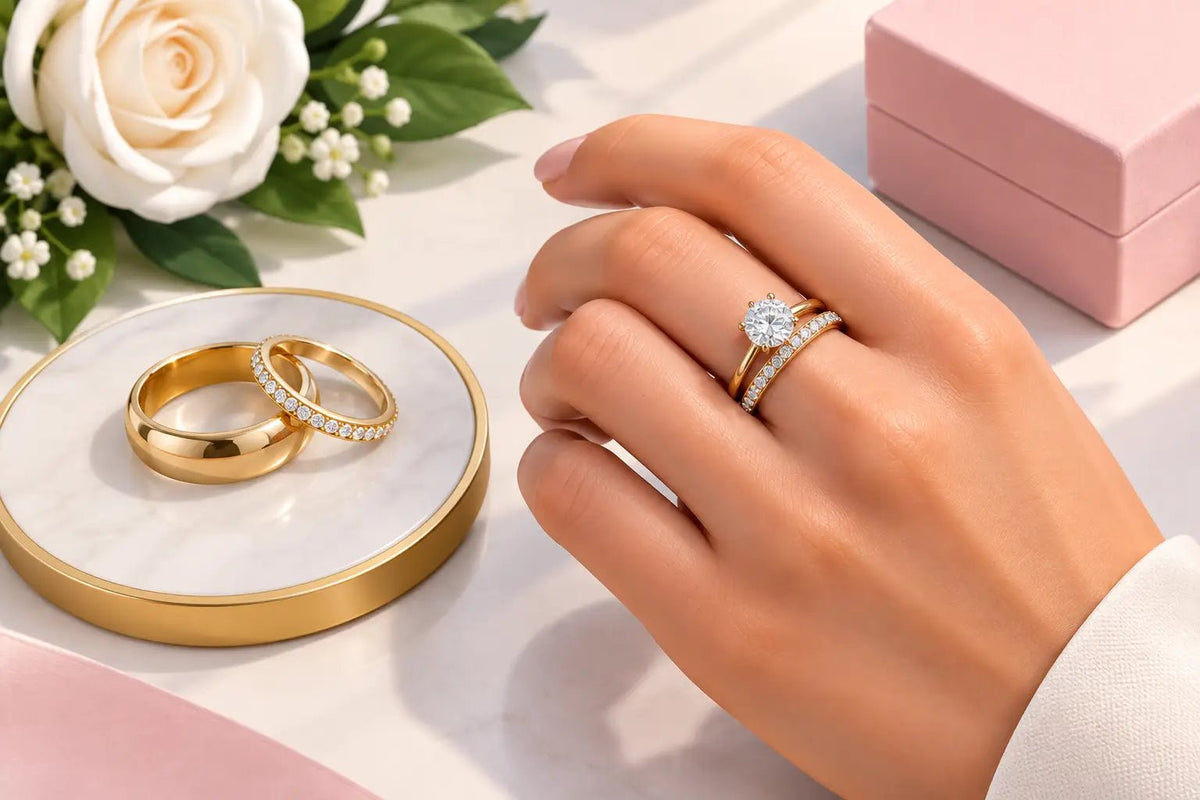
A wedding ring is exchanged at the ceremony and is traditionally worn closest to the heart, beneath the engagement ring on the left ring finger. Its role is symbolic, but its design should never feel secondary. This is often the piece worn most consistently, including on days when the engagement ring stays safely at home.
A polished gold band is timeless and understated. A diamond eternity band offers continuous brilliance from every angle. A half-eternity band concentrates diamonds across the visible top portion, which can be more practical for resizing and can feel more comfortable for everyday wear. A channel-set band gives the stack a sleek, structured finish, while a shared-prong design creates maximum light play.
The wedding band does not need to match the engagement ring exactly. Matching metal colors create a cohesive, classic bridal set, but mixed metals can look intentional and modern. A yellow gold band beneath a white gold solitaire, for example, adds dimension without taking attention away from the center diamond.
How Wedding and Engagement Rings Work as a Set
The most elegant bridal stacks look considered rather than overly coordinated. The engagement ring is typically the focal point; the wedding band should complement its profile, proportions, and character.
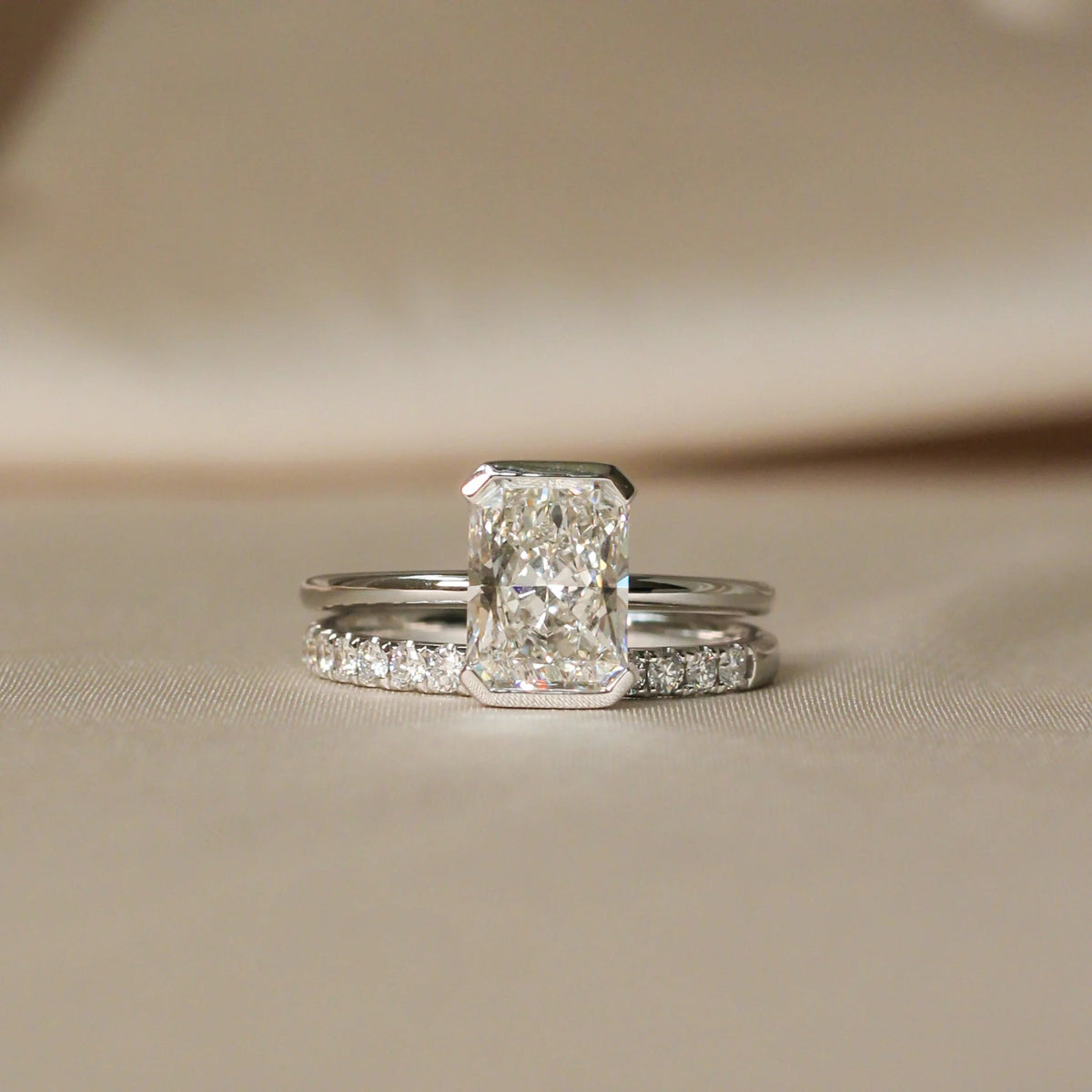
If the engagement ring has a straight band and a raised center setting, many wedding bands will sit flush against it. If the center diamond is set low or the setting extends beneath the stone, a straight band may leave a small gap. Some people love that airy separation. Others prefer a curved or notched contour band that nestles neatly against the engagement ring.
Diamond scale also matters. A delicate pavé band can emphasize the drama of a larger solitaire without competing with it. A wider eternity band creates a bolder, high-jewelry effect, especially when paired with a streamlined center-stone setting. There is no universal rule that the wedding band must be thinner, plainer, or less brilliant. It depends on whether you want the stack to read as classic, balanced, or unmistakably statement-making.
Try to consider the rings together before making a final decision. Even if the wedding band will be chosen later, knowing the engagement ring’s width, setting height, and metal color will make future pairing much easier.
Do You Need Both Rings?
No. Wearing both an engagement ring and a wedding band is a tradition, not a requirement. Some people choose one exceptional ring and continue wearing it after the wedding. Others prefer a wedding band alone, especially if they want a minimal, low-maintenance daily piece.
There are also couples who select an engagement ring and wedding band at the same time, then wear the band alone until the ceremony. Others choose a diamond wedding band that works equally well as an engagement ring, particularly when they want a refined, stackable look rather than a prominent center stone.
The decision comes down to sentiment, comfort, budget, and personal style. Two rings offer more opportunities to mark separate milestones and build a layered look over time. One ring can feel equally meaningful, with a clean and confident point of view.
Choosing Metals and Diamonds for a Cohesive Look
For a traditional set, choose the same gold color and karat for both rings. This creates visual continuity and helps the metals wear at a similar rate. White gold gives diamonds a bright, icy appearance; yellow gold brings richness and timeless contrast; rose gold adds a warm, distinctive finish.
If you mix metals, make it deliberate. Repeating the secondary metal elsewhere in your jewelry - through earrings, a tennis bracelet, or a diamond necklace - can make the combination feel curated. Gold purity may also be mixed, although keeping both rings at the same karat is usually the simplest path for a matched set.
Lab-grown diamonds offer another advantage when building a bridal pairing: you can prioritize exceptional sparkle across both rings. A luminous center stone and a diamond wedding band can create a complete fine-jewelry statement without treating ethics or visual impact as competing priorities.
Ring Size, Fit, and Long-Term Comfort
The best ring is one you want to wear constantly. Your ring size can shift with temperature, travel, exercise, and time of day, so it is wise to measure when your hands are at a comfortable, normal temperature. Wider bands tend to feel tighter than narrow ones, which may affect the size that feels best.
When wearing two rings together, consider their combined width. A substantial engagement ring paired with a wide eternity band can feel more snug than either ring worn alone. If you are between sizes, professional guidance can help you find a fit that feels secure without becoming restrictive.
It is also worth thinking ahead about care. Remove diamond rings for heavy lifting, intense workouts, gardening, and activities involving harsh chemicals. Check prongs periodically, clean the rings gently, and store them separately when not worn. Fine jewelry is made to be enjoyed, but a little care preserves its brilliance.
Whether you choose a sculptural solitaire with a luminous diamond band or a single ring that says everything you want it to say, let the design reflect your life as much as your aesthetic. The most lasting bridal jewelry is not chosen to follow a rule - it is chosen because every time it catches the light, it feels unmistakably yours.