Rose Gold Versus Yellow Gold: Which Suits You?
A diamond’s setting does more than hold its brilliance in place. It sets the entire mood. In the choice between rose gold versus yellow gold, one brings a warm, romantic flush while the other delivers unmistakable classic luxury. Both flatter lab-grown diamonds beautifully, but they create very different impressions on the hand, at the neckline, or layered into an everyday jewelry wardrobe.
For an engagement ring, a diamond tennis bracelet, or a high-carat riviera necklace, the right gold color should feel intentional. Consider your personal palette, how you wear jewelry, the diamond shape you love, and whether you want a quiet signature or a statement that arrives before you do.
Rose Gold Versus Yellow Gold: The Visual Difference
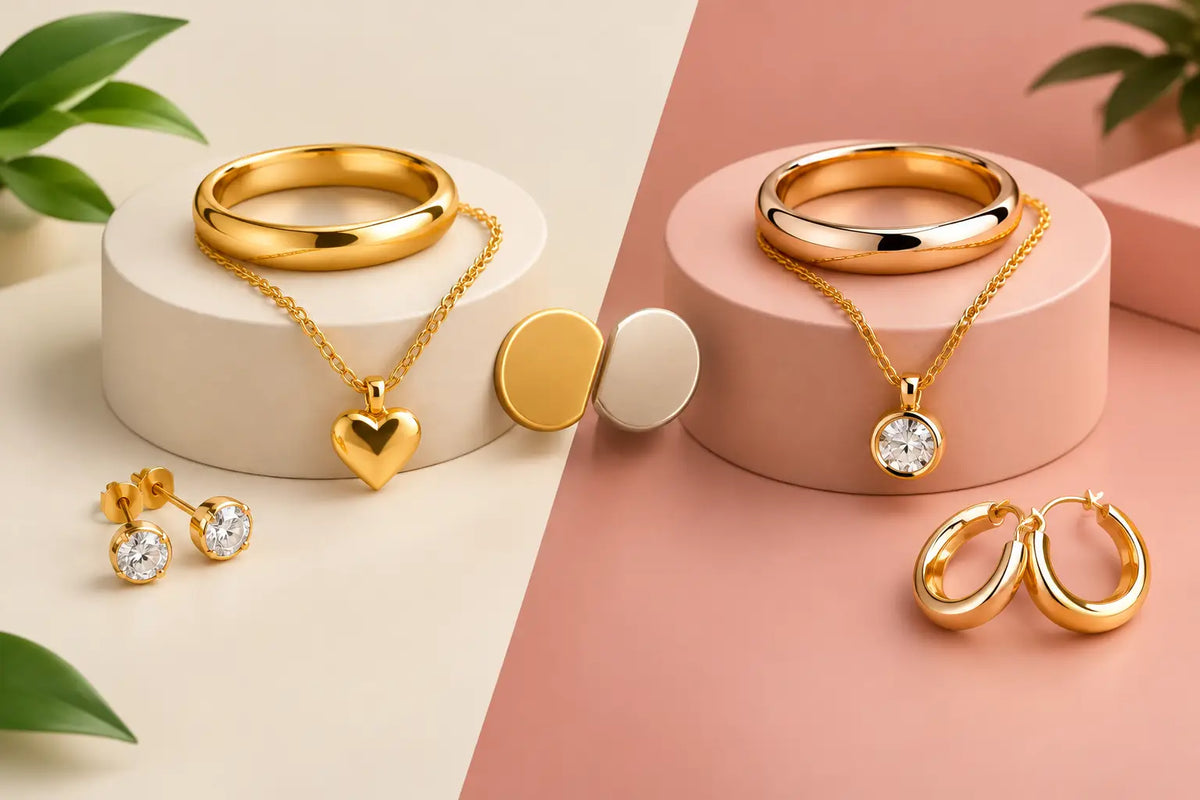
Yellow gold is luminous, rich, and instantly recognizable. Its warm golden tone has defined fine jewelry for centuries, from heirloom solitaires to bold chain necklaces. It creates a polished contrast with white lab-grown diamonds, making each stone appear crisp, bright, and confidently defined.
Rose gold has a softer warmth. Its blush tone comes from a higher proportion of copper in the alloy, creating a color that reads romantic, modern, and slightly unexpected. Against diamonds, rose gold can make a design feel more personal and fashion-forward without losing the refinement expected of fine jewelry.
Neither is inherently more luxurious. The distinction is aesthetic. Yellow gold makes a clear, golden statement; rose gold adds warmth with a subtler, more intimate point of view. A hidden-halo solitaire in yellow gold may feel iconic and high-impact, while the same silhouette in rose gold becomes more distinctive and softly glamorous.
How Each Gold Color Works With Lab-Grown Diamonds
Lab-grown diamonds offer the same exceptional beauty, structure, and sparkle as mined diamonds. Their interaction with gold is all about contrast and light.
Yellow gold’s saturated tone can make colorless or near-colorless diamonds look especially icy by comparison. This is a compelling choice for larger center stones, pear-shape diamonds, emerald cuts, and bezel-set pieces where the metal is part of the visual architecture. A yellow gold setting also gives diamond-heavy designs a confident, editorial finish.
Rose gold is exceptionally flattering with round brilliant, oval, cushion, and pear diamonds. Its rosy glow softens the overall composition and can bring a romantic dimension to a clean solitaire or diamond-accented band. Because rose gold is less traditionally expected than yellow gold, it is also a strong choice for someone who wants a bridal ring that feels timeless but not conventional.
For diamond necklaces and earrings, the decision often comes down to skin tone and wardrobe. Yellow gold creates a warm, sunlit frame around the face, while rose gold gives diamond drop earrings and delicate pendants a refined, almost candlelit glow. Both work beautifully with white diamonds. Choose the effect that feels closest to your personal style.
What Creates the Color?
Pure gold is naturally yellow, but it is too soft for most fine-jewelry designs. Gold is alloyed with other metals to improve strength and create the finished color.
Yellow gold typically combines pure gold with metals such as silver and copper. Rose gold uses more copper, which produces its signature pink hue. The exact shade can vary slightly by karat and alloy formula. A 10K rose gold piece may appear more pronounced and rosy than an 18K version, while 18K yellow gold often looks richer and more saturated because it contains more pure gold.
This is worth considering when selecting a setting online. Metal color and gold purity work together. If you are drawn to a stronger golden glow, 18K yellow gold may be the right expression. If you prefer a durable everyday piece with a distinct rosy cast, 14K rose gold offers an excellent balance of color, strength, and fine-jewelry presence.
10K, 14K, and 18K at a Glance
A higher karat means a higher percentage of pure gold, not automatically a better choice for every wearer. 10K gold is durable and practical for frequent wear, with a lower pure-gold content. It is well suited to active lifestyles and diamond-forward pieces where you want strength without sacrificing shine.
14K gold is the enduring favorite for everyday fine jewelry. It offers meaningful gold content, excellent durability, and a polished finish that holds up beautifully across rings, bracelets, earrings, and necklaces. For many engagement rings and tennis bracelets, 14K is the ideal middle ground.
18K gold contains more pure gold and has a deeper, more luxurious color. Its richness is especially striking in yellow gold, and it delivers a premium feel for statement rings, occasion jewelry, and pieces designed to become heirlooms. Because it is softer than 10K or 14K, it may require more mindful wear, particularly in delicate ring settings.
Durability, Care, and Everyday Wear
Rose gold is often praised for its durability because copper is a strong alloying metal. A rose gold ring can be an excellent option for daily wear, especially in 14K. Still, durability depends on the overall design, karat, setting style, and how the jewelry is worn. A slim pavé band needs more care than a substantial bezel setting, regardless of metal color.
Yellow gold is also highly wearable, particularly in 14K. Over time, gold jewelry can develop fine surface marks - a natural record of wear that many people find appealing. Polishing can restore a high shine, though excessive polishing should be avoided because it removes a small amount of metal.
Rose gold’s color is inherent to the alloy, so it does not require rhodium plating to maintain its tone. Yellow gold is similarly straightforward to care for. Both can be cleaned with warm water, mild soap, and a soft brush, then dried with a lint-free cloth. Remove fine jewelry before intense exercise, swimming, household cleaning, or any activity that puts a ring or bracelet at risk of hard impact.
Which Gold Color Flatters Your Skin Tone?
Traditional style guidance often places yellow gold with warm or olive undertones and rose gold with neutral or cool undertones. That can be useful, but it is not a rule. Jewelry should not be reduced to a color chart when your own eye is the final authority.
Yellow gold tends to look radiant against deeper skin tones and warm complexions, creating contrast that feels bold and intentional. It also pairs naturally with camel, ivory, black, chocolate brown, and saturated jewel tones. If your wardrobe already includes warm hardware, golden watches, or caramel-toned accessories, yellow gold will likely feel immediately at home.
Rose gold is especially compelling on neutral undertones and can add softness to fair, medium, and deep complexions alike. It pairs beautifully with blush, gray, cream, burgundy, navy, and monochrome looks. Its appeal is often emotional as much as visual: rose gold feels romantic without becoming overly sweet when paired with a strong diamond silhouette.
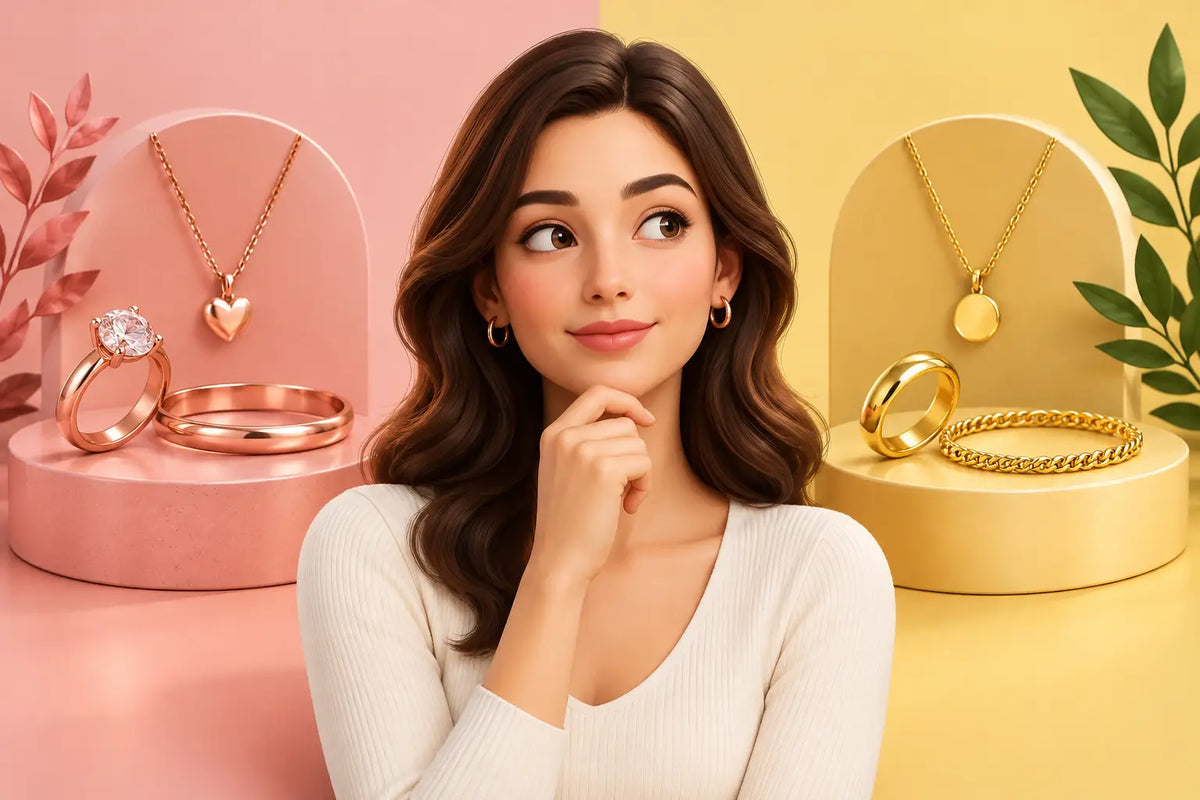
The most reliable test is the jewelry you already reach for. If yellow gold makes you feel polished and powerful, follow that instinct. If rose gold feels like the version of classic jewelry that better reflects you, that is your answer.
Engagement Rings: Classic Presence or Modern Romance?
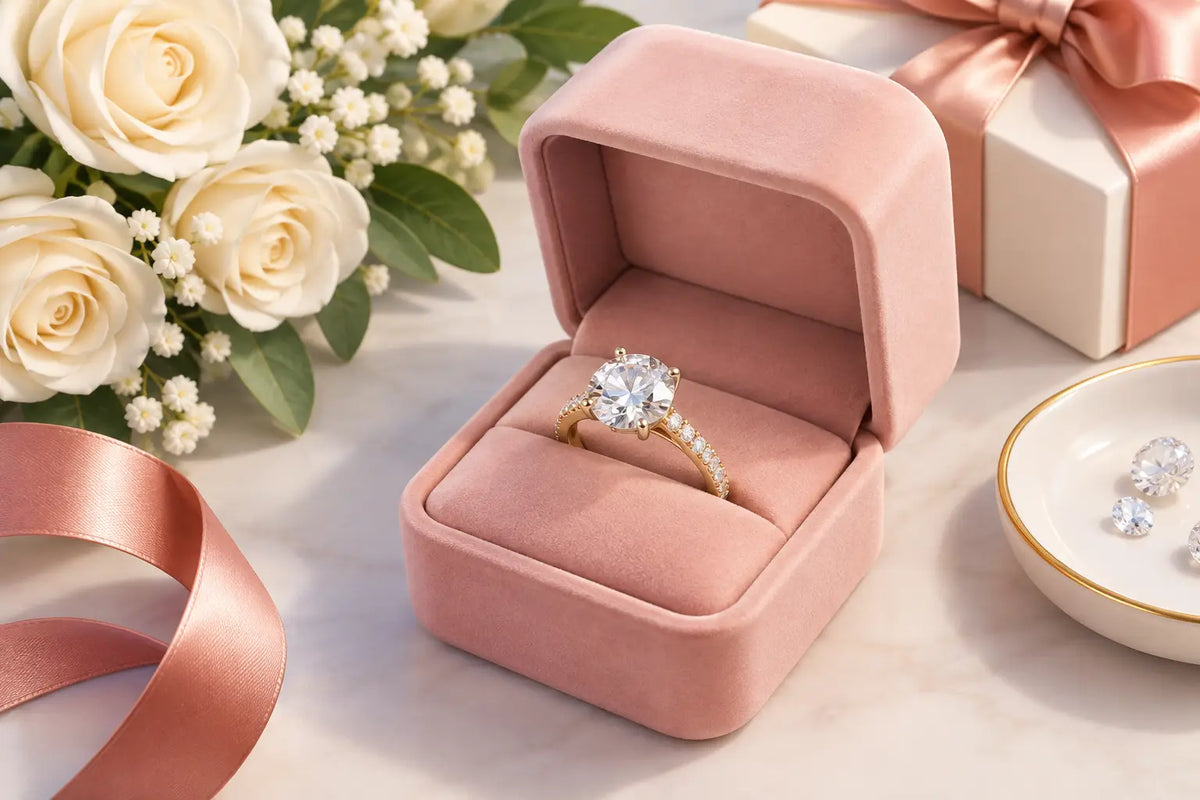
For bridal jewelry, yellow gold remains a defining choice for those who want a ring with timeless authority. A yellow gold solitaire lets the diamond take center stage while the warm band adds visual dimension. It is particularly beautiful with elongated shapes such as oval, radiant, pear, and emerald-cut lab-grown diamonds.
Rose gold creates a more individual bridal look. It can make a hidden-halo solitaire feel romantic and elevated, especially when paired with a bright white diamond and a refined setting. Choose rose gold if you want a ring that feels personal, feminine, and current without relying on a trend that will quickly date.
Think about the wedding band, too. A matching metal creates a unified look, while mixed metals can add contrast. Yellow gold with a rose gold band is possible, but the effect is deliberate and should feel like part of your larger jewelry style rather than an afterthought.
Styling Yellow Gold and Rose Gold Beyond the Ring
Yellow gold has a natural affinity for bold diamond jewelry. A graduated pear diamond drop earring, an iced-out riviera necklace, or a bezel-set tennis bracelet gains a confident, high-jewelry character in this metal. It is the choice for dressing with presence, whether the occasion is a black-tie event or an elevated everyday look.
Rose gold shines in pieces that sit close to the skin: diamond pendants, stackable rings, delicate tennis bracelets, and earrings that catch the light with movement. It can soften a heavily diamond-set design and make it feel more wearable from day to night.
There is no need to commit to one metal forever. Mixing yellow and rose gold can look sophisticated when the diamonds provide a visual link between pieces. Keep the proportions intentional: perhaps a yellow gold statement necklace with a rose gold ring, or rose gold earrings beside a yellow gold watch. The shared brilliance of the diamonds keeps the combination cohesive.
At Eternal Jewels, every gold color is an opportunity to shape a piece around your own version of luxury. Choose yellow gold when you want radiance with classic power. Choose rose gold when you want warmth, romance, and a more unexpected signature. The best setting is the one that makes you want to look at your hand, your wrist, or your reflection one more time.